

How to Support Someone with OCD, Without Reinforcing the Cycle

by Megan Rose, LMHC, BICBT-CC
“Nothing I do is working, and things keep getting worse.”
I can’t count how many times I’ve heard this from my clients’ loved ones.
The first step is to become aware of the OCD cycle and how it presents in your loved one. You can learn more about the OCD cycle by reading our blogs: The Difference Between OCD and Anxiety and Why Reassurance Can Make OCD Worse.
To summarize, OCD consists of obsessions and compulsions. Compulsions are typically easier to notice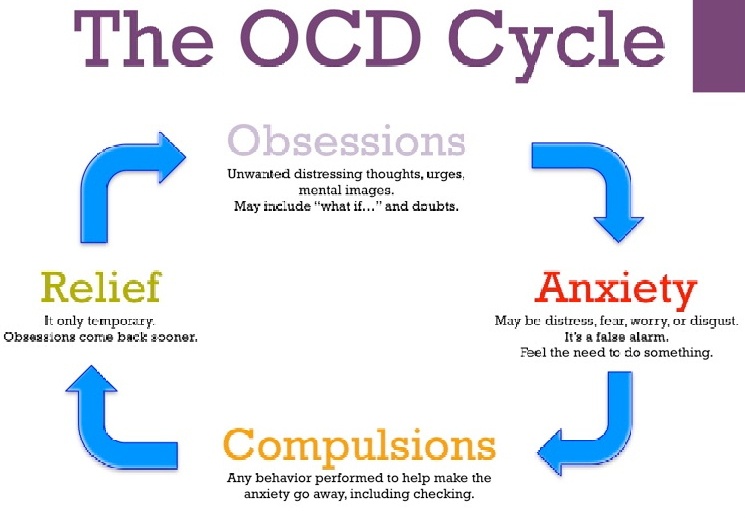 because they can be behavioral and visible to others. Perhaps you observe your loved one avoiding certain situations, seeking reassurance, checking, confessing, or taking a long time to complete tasks. Maybe your child doesn’t want you to say certain words or express things that make them feel a certain way. Perhaps your loved one struggles to eat or bathe. Some children might refuse to touch certain things or ask you to complete specific routines to help them feel better.
As a parent or loved one, it’s completely natural to want to protect your family. This might mean fulfilling a family member’s requests to help them feel better. And it might work…temporarily. However, over time, the routines, rituals, or compulsions can become more frequent, intense, and time-consuming.
In the OCD world, we call this accommodation. Accommodation occurs when loved ones step in to “save,” “help,” or “protect” someone from experiencing the discomfort associated with OCD rather than allowing them the opportunity to face and tolerate that discomfort.
I completed a certification for SPACE (Supportive Parenting for Anxious Childhood Emotions), developed by Eli Lebowitz. During the course, they shared a helpful definition of support:
Validation + Confidence = Support.
True support means validating your loved one’s feelings (which doesn’t mean you have to understand or agree with them) while also expressing confidence in their ability to tolerate fear and discomfort.
Family can play a role in treating their loved ones OCD. Unfortunately, there isn’t one right way to reduce accommodation. However, finding a trained OCD provider can help. Together, you can work step by step to develop a plan to reduce accommodation while increasing both your and your loved one’s ability to tolerate discomfort.
You can support your loved one without supporting the OCD.
A few recommendations/references:
Lebowitz, E. R. (2021). Breaking free of child anxiety and OCD: A scientifically proven program for parents. Oxford University Press.
If you want to purchase the book you can check it out here, I strongly recommend it: Breaking Free of Child Anxiety and OCD
The International OCD Foundation (IOCDF) has great support. Each year I attend the OCD conference and learn really helpful information. They have specific lectures specifically for people with OCD and their family members.
Interested in learning more? Check out our blogs:
Why Reassurance Can Make OCD Worse (Even When It Feels Helpful!)
What OCD Actually Looks Like: Beyond Handwashing and Checking